Don’t build education strategy on tech targets - Microsoft
If you plan around specific tools, you will not achieve broader objectives, says VP of Education.
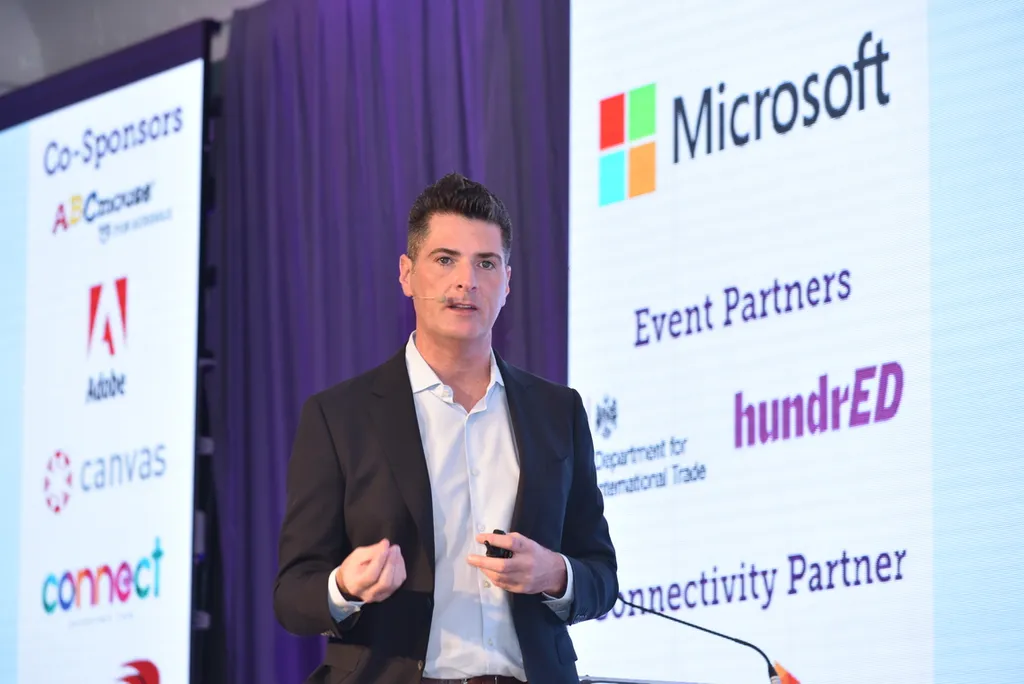
Governments must not base their education policies on targets to implement new technology, Anthony Salcito, Vice President of Worldwide Education at Microsoft has warned.
“Leaders have already failed if they don’t establish the right strategic vision upfront,” he said today. The vision should not be about specific tools or systems, but "about the agenda that you set.”
Salcito cautioned against education strategies based on targets to accumulate new equipment, such as “we’re going to buy a device for every kid, we’re going to wire every classroom to the internet”.
These strategies, he warned, simply receive hostile responses from stakeholders - who question the cost of the programme. “There will be an immediate reaction negatively because it feels like a decision that was made without vetting, without proper evidence”.
Target-based plans also set up schools to fail because the education system isn’t prepared to use the technology to its full potential. “Teachers aren’t prepared, school leaders aren’t prepared, change doesn’t happen universally, the curriculum isn’t aligned,” he said. These problems mean that “you’re constantly patching a leaky boat” - fixing implementation issues rather than moving ahead.
Instead, education ministries must set out a 20-year vision of what they want to achieve, Salcito believes, adding that five year plans do not allow countries to prepare for their digital future.
Ministries should ask bigger questions around "how to empower every student to reach their potential, how do I link to a context that’s constantly changing, how do I create skills to align with what’s needed in the workplace". He noted that, ultimately. "technology will be an answer to all of those questions".
Salcito also said that the top ranking education systems in the world are constantly challenging their systems to plan ahead. “The best performing education systems in the world are also the most eager to drive change, and that should be a wake up call in every country that’s not there and not embracing the change that’s possible.”
Don Carlson, Education Lead for Asia Pacific, added that there are three key trends driving education reform in the region.
First is the debate around the quality of education, he noted, driving large-scale plans to improve the standard of teaching and learning in school systems.
Second is youth employability. he said, adding that “the STEM area especially underpins a lot of that in the region".
Third, he noted, is equity of access. “We can’t have students not have access to technology because of their gender, because of the geography of where they are, or because the technology is not enabled there,” he said.
Salcito and Carlson were speaking at a media briefing in Kuala Lumpur today.
Berlangganan Bulletin GovInsider: Pembaruan terkini tentang inovasi sektor publik
*Jika saya telah memberikan alamat email domain non-bisnis (seperti, namun tidak terbatas pada, gmail, hotmail, dll) saya melakukannya dalam konteks yang digunakan untuk bisnis saya dan bukan interaksi pribadi dengan GovInsider.
GovInsider adalah bagian dari Clarion Events Pte Ltd yang merupakan bagian dari Grup perusahaan Clarion Events (Clarion).
Kami menjaga privasi Anda dengan serius. Kami ingin menggunakan informasi Anda berdasarkan kepentingan sah kami untuk tetap berhubungan dengan Anda tentang acara, produk, dan layanan relevan yang mungkin menarik bagi Anda. Kami hanya akan menggunakan informasi yang kami kumpulkan atau terima tentang Anda sesuai dengan Kebijakan Privasi kami. Jika Anda memilih kami untuk tidak menghubungi Anda tentang acara, produk, dan layanan relevan yang kami yakin akan Anda minati, Anda dapat mengelola preferensi Anda melalui link yang akan kami kirimkan kepada Anda, berhenti berlangganan menggunakan link di email kami atau dengan mengirim email ke [email protected].