Exclusive: How AI is used in the hunt for terrorists
Interview with Noboru Nakatani, Executive Director of the INTERPOL Global Complex for Innovation.
 Law enforcement agencies need to change traditional procedures and priorities in order to tackle cyber crime—and this has to come right from the top. “There must be a political decision. It's not bottom up,” Nakatani says. “This is awareness raising, not only to the general public, but I think also for decision makers.”
INTERPOL has identified three key trends in cybercrime that officials should know: cyber bank robberies, like the $81 million heist of Bangladesh Bank; ransomware like the massive WannaCry attack; and “business email compromise” where a cyber criminal impersonates a business executive to get employees or vendors to transfer funds or sensitive data.
Governments can change the way they approach cyber crimes by balancing between security risks and growth opportunities. Too much of regulation will stifle innovation, while too little could create chaos. Nakatani advises governments to use a seven-stype cycle to balance this: awareness raising, prevention, detection, mitigation, disruption, investigation and prosecution.
The public sector will need to allocate specific resources at each of these stages. “For instance, in awareness raising, the government has a great role to play,” he says. There could also be some tax incentives for businesses to introduce cyber security services in the market, he adds.
Finally, for “maximum damage to criminals”, businesses must be willing to share cyber crime information with each other. “This kind of mechanism needs to be institutionalised in each industry,” Nakatani says. For instance, the big three German car manufacturers share information on attacks with each other, he says. All three businesses have a great stake in connected and driverless cars, and an attack on cars could do a great deal of damage to the entire automobile industry.
Criminals may always be quicker in adopting technologies. But artificial intelligence and partnerships with innovative businesses could offer governments a chance to step up their game.
Mr Nakatani will be speaking at the INTERPOL World 2017 Congress, held on 4 to 6 July.
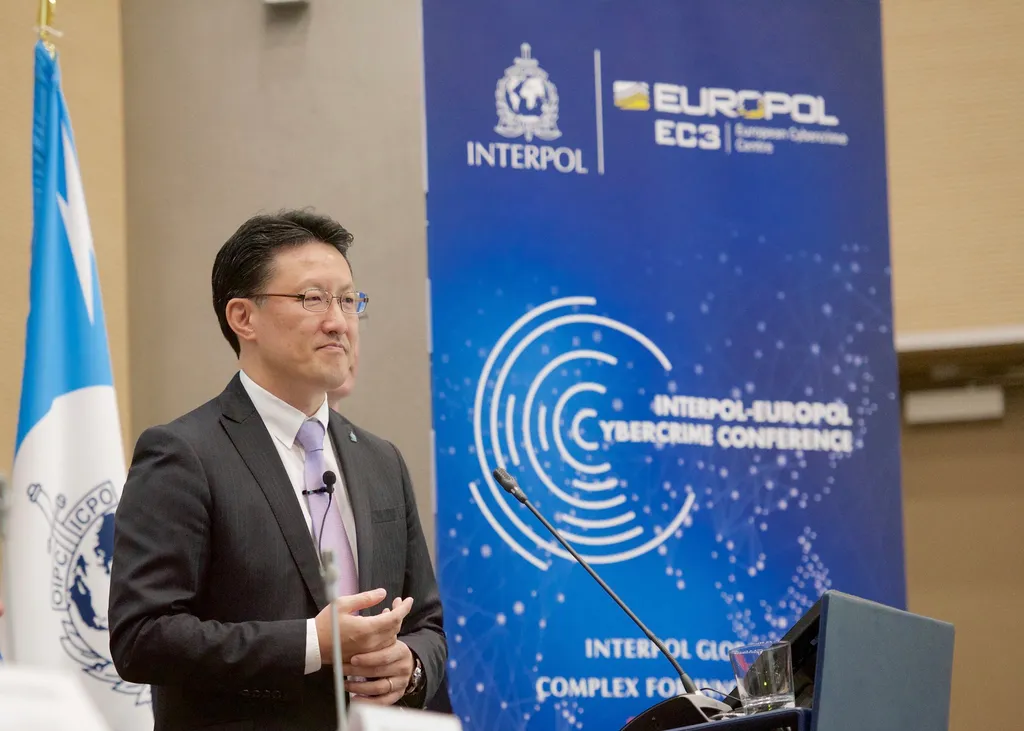
Image of Mr Noboru Nakatani ©INTERPOL
Image of police unit by André Gustavo Stumpf - CC BY 2.0
Law enforcement agencies need to change traditional procedures and priorities in order to tackle cyber crime—and this has to come right from the top. “There must be a political decision. It's not bottom up,” Nakatani says. “This is awareness raising, not only to the general public, but I think also for decision makers.”
INTERPOL has identified three key trends in cybercrime that officials should know: cyber bank robberies, like the $81 million heist of Bangladesh Bank; ransomware like the massive WannaCry attack; and “business email compromise” where a cyber criminal impersonates a business executive to get employees or vendors to transfer funds or sensitive data.
Governments can change the way they approach cyber crimes by balancing between security risks and growth opportunities. Too much of regulation will stifle innovation, while too little could create chaos. Nakatani advises governments to use a seven-stype cycle to balance this: awareness raising, prevention, detection, mitigation, disruption, investigation and prosecution.
The public sector will need to allocate specific resources at each of these stages. “For instance, in awareness raising, the government has a great role to play,” he says. There could also be some tax incentives for businesses to introduce cyber security services in the market, he adds.
Finally, for “maximum damage to criminals”, businesses must be willing to share cyber crime information with each other. “This kind of mechanism needs to be institutionalised in each industry,” Nakatani says. For instance, the big three German car manufacturers share information on attacks with each other, he says. All three businesses have a great stake in connected and driverless cars, and an attack on cars could do a great deal of damage to the entire automobile industry.
Criminals may always be quicker in adopting technologies. But artificial intelligence and partnerships with innovative businesses could offer governments a chance to step up their game.
Mr Nakatani will be speaking at the INTERPOL World 2017 Congress, held on 4 to 6 July.
Image of Mr Noboru Nakatani ©INTERPOL
Image of police unit by André Gustavo Stumpf - CC BY 2.0