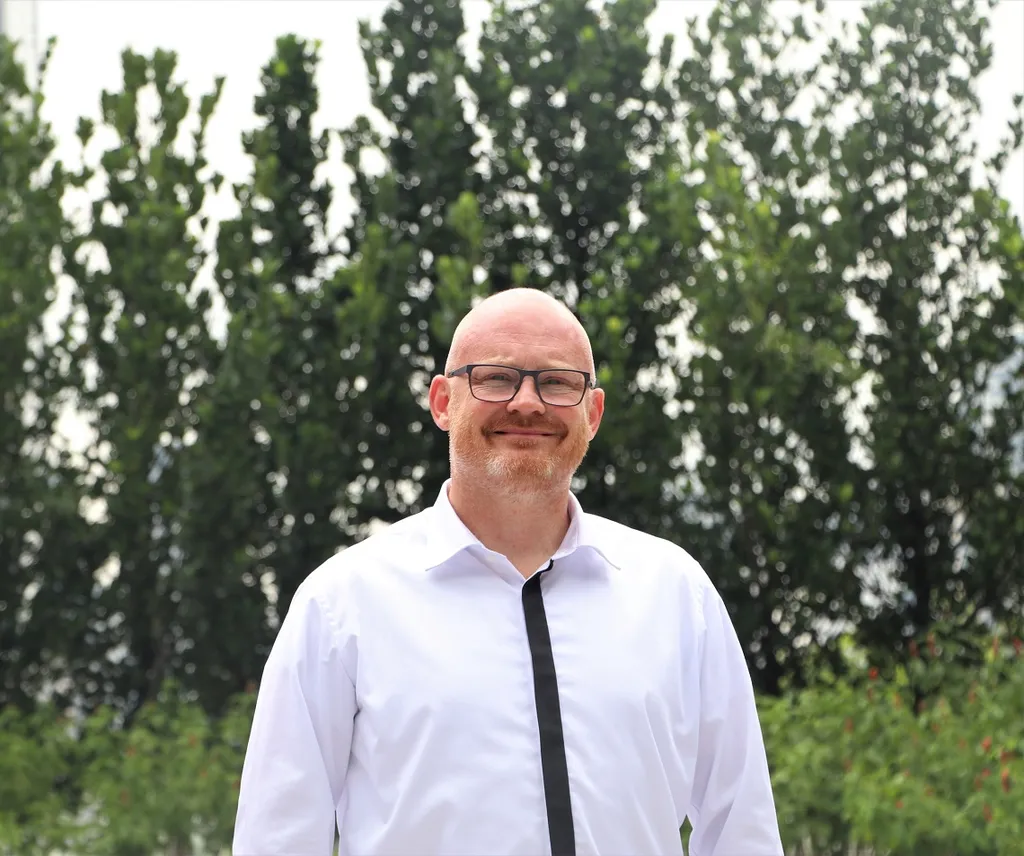
Interview with Morten Kabell, Mayor for Environmental and Technical Affairs, Copenhagen.
Copenhagen has a “huge, ambitious target” to reach zero carbon emissions by 2025, explains Morten Kabell, Mayor for Environmental and Technical Affairs.
Denmark’s capital city has made big changes to achieve this. All public buses and ferries will be powered by electricity; two new metro lines will launch; and this cycling city will have even more bike lanes.
But “it's also about becoming a resilient city that is able to cope with climate change”, he believes. That starts at the top, with a vision to include citizens and set out policies that make Copenhagen more sustainable.
From diesel to electricity
Sustainable transport is one big piece of the carbon neutrality puzzle. From 2019, Copenhagen’s public buses and harbour buses, or ferries, will be using electricity, phasing out the use of diesel fuel, says Kabell.
This is going to be costly for the city, however. Estimates show that if all 385 public buses in Copenhagen to go electric, it will cost DKK 68 million (US$10.8 million) more than existing diesel buses per year to operate them. A substantial DKK 49 million (US$7.8 million) will be spent on electricity taxes alone, according to Energy Watch. Nevertheless, for Copenhagen to achieve its 2025 target, it needs to make “some hard choices” on transport modes, Kabell notes.
The city is also implementing more public transport options to drive down the need for car trips. It is currently building two new billion-dollar metro lines which will open in phases between 2019 and 2023, says Kabell.
A living lab
As the city overhauls its transport system, it is also testing sustainable smart city solutions in its Street Lab, an urban area near City Hall Square in central Copenhagen. These projects address everything from waste collection to air pollution, and even “measuring humidity in plants to let our gardeners know if it is necessary to water them or not”.
For instance, the city is exploring “adaptive traffic control”. It began with intersections that can detect the shapes of bicycles or public transport vehicles, and give them priority. “If you have a bus that’s a little late, then it gets a few more seconds of green,” he explains. The same goes for groups of bicycles, he adds.
Trials showed that public transport vehicles have been able to move 30% faster through the streets because of this technology, Kabell says. “It is great for commuters, but also great for the economy,” he notes. “Everyone benefits.”
The government is working closely with the private sector to test new technologies and IoT solutions over a three-year period, and the resulting proof-of-concept will help officials decide whether to scale up these solutions on a citywide level.
Citizens go green
People play a huge role in shaping their city. In fact, they were the “driving force” behind Copenhagen adopting a bicycle culture, according to Kabell. “It was Copenhageners who had enough and demanded from city council to get the city back,” he remarks.
[blockquote]“It was Copenhageners who had enough and demanded from city council to get the city back.”[/blockquote]
The city listened, and allocated more bicycle lanes, which can actually accommodate up to ten times more travellers. Now, there is less of a need for car parks in the bustling city centre, and children can cycle to school instead of having their parents take them, Kabell explains.
“We need citizen engagement and more,” Kabell believes, adding that “we simply need to have people at every single level” of the planning and decisionmaking process. As an example, Copenhageners had a major say in the way a city square was designed. They chose the type of greenery they actually wanted, and made changes to the layout. Now, the square is buzzing with activity even on grey days, he says.
Cutting cars
Copenhagen has eight years to go before its 2025 deadline. While electric buses and new metro lines are costly projects, they will help to make the city car-lite, while more trees do their part to filter carbon out of the air. Up to 40,000 new trees have been planted in the city so far, with a target of 100,00 over the next few years, says Kabell.
It also means switching over to sustainable biomass as an energy source, and retrofitting power plants to be able to use wind and solar energy, he continues.
Ultimately, the key in all this is to make sure that Copenhageners have a say in how their home looks like, and impacts the environment. “Citizens have to live with it. Let’s make sure that they enjoy it.”